Ground Improvement Guide

Ground improvement methods compared

When the existing ground is too weak, too variable or too compressible, improving it is often more economical than founding through it. This guide explains each method we design and verify, what it suits, the key design and construction controls and where it runs out of usefulness.

Start here

Improve, replace or found through — compared honestly

The right answer depends on the depth of poor ground, the sensitivity of the structure, access, programme and what can be verified during construction.

Shallow problems are usually best solved by replacement or compaction. Deeper compressible layers push the decision toward columnar improvement or piling. We compare candidate methods on constructability, verification, programme and residual risk, then design and specify the selected option with the testing needed to prove it.

  1. 01Depth of poor groundShallow problems favour replacement; deeper compressible layers favour columns or piles.
  2. 02Settlement targetServiceability limits usually decide spacing and treatment depth.
  3. 03Access & plantSite width, headroom and adjacent structures can rule out entire method families.
  4. 04VerificationChoose methods that can actually be proven on your site within the programme.
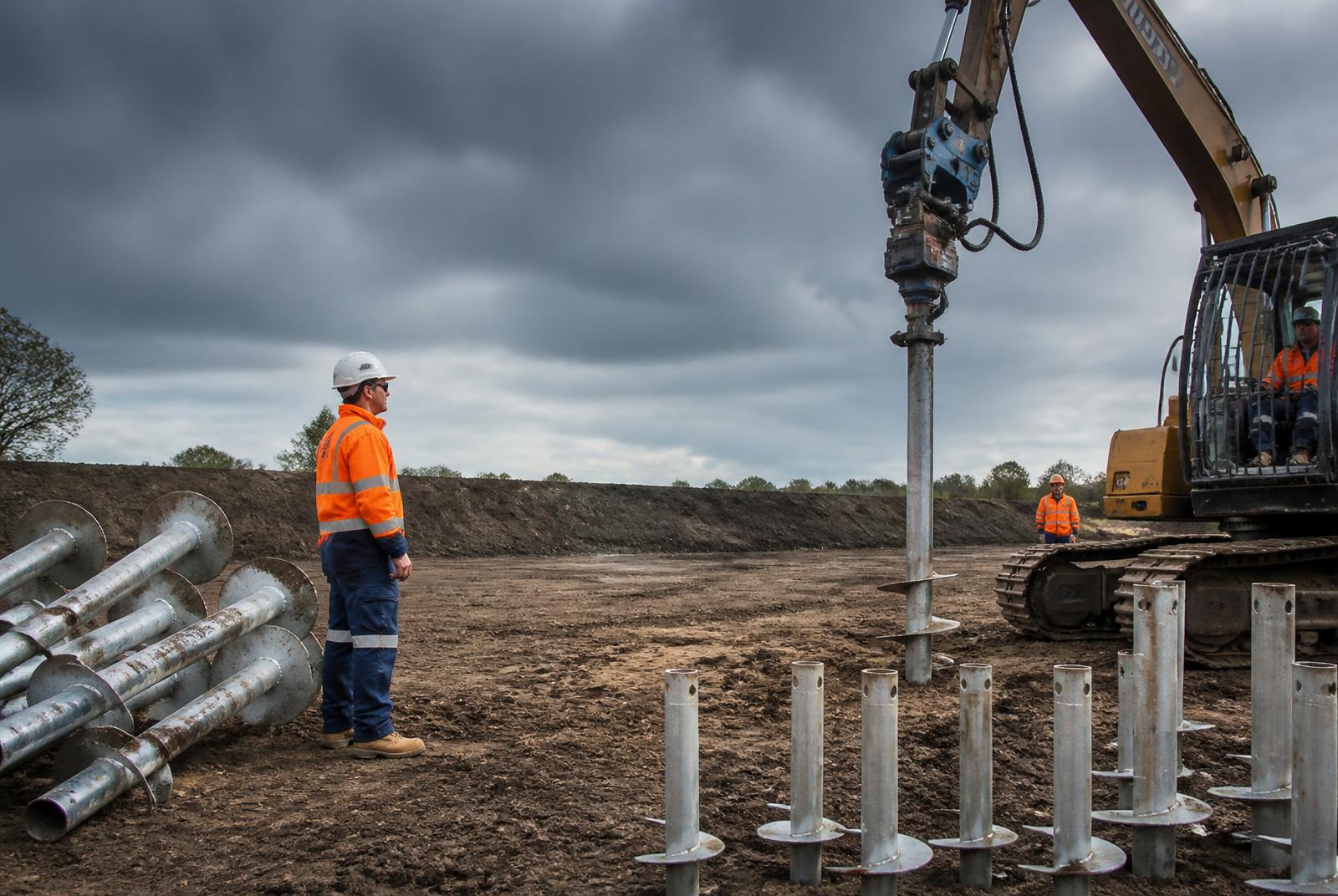
Helical pile being screwed into the ground by an excavator-mounted drive head

Comparison

Method-by-method — at a glance

An overview only. Every entry below is described cautiously and is not an engineering limit; suitability is always confirmed against site-specific data.

Comparison of methods, typical applications and key limitations
MethodsBest suited toKey consideration
Helical PilesLight to moderate structures, decks and additions, tight-access sites and rapid installation with minimal spoil.Installation torque provides on-site capacity correlation; corrosion protection is matched to soil aggressivity.
Piling SolutionsStructures where surface soils cannot be relied upon and load must reach deeper competent material.Pile type, length and testing regime set against ground profile, noise, vibration and access constraints.
Ground StabilisationMoisture-sensitive subgrades, pavement platforms and reworking marginal site-won material.Binder type and dosage established by laboratory mix design, with moisture and mixing control on site.
Soil ReplacementShallow uncontrolled fill, soft pockets and localised poor ground within reach of an excavator.Material specification, layer thickness, moisture window and density testing frequency defined up front.
Compaction & EarthworksBuilding platforms, roads, hardstands and any site requiring controlled level raising.Specification covers material suitability, lift thickness, plant type, compaction targets and test frequency.
Reinforced Soil SolutionsSoft subgrades, plant access platforms and slopes steeper than the soil would stand unaided.Reinforcement strength, spacing, embedment and drainage designed as a system with the fill.
MicropilesUnderpinning, restricted access, low headroom and transferring load through weak near-surface soils.Bond length, grout quality and reinforcement sized to load; test piles are common on critical works.
Jet GroutingGround strengthening, seepage cut-off and localised underpinning beneath existing structures.Trial columns confirm geometry and strength; spoil management and pressure control are critical.
Deep Soil MixingSoft clays and silts where strength, stiffness and settlement performance must be improved to depth.Binder dosage from laboratory mix design; verification by coring, sampling or in-situ testing.
Stone Columns / Vibro ReplacementReducing settlement and improving bearing beneath embankments, slabs and tank or pad footings.Grid spacing and column diameter set by settlement targets; column formation verified during installation.

Methods

Method-by-method

Depths, spacings and capacities are always project-specific and confirmed by design and testing. The notes below describe intent and typical suitability only.

Method 01

Helical Piles

Steel shafts with helical plates screwed into the ground to transfer load to a competent stratum.

Best suited to / typical applications

Light to moderate structures, decks and additions, tight-access sites and rapid installation with minimal spoil.

Design & construction considerations

Installation torque provides on-site capacity correlation; corrosion protection is matched to soil aggressivity.

Limitations, risks & verification

Less suited to gravels, obstructions or shallow rock; capacity must be verified during installation.

Discuss this option

Method 02

Piling Solutions

Bored, driven, screw and CFA piling systems selected to suit ground conditions and load requirements.

Best suited to / typical applications

Structures where surface soils cannot be relied upon and load must reach deeper competent material.

Design & construction considerations

Pile type, length and testing regime set against ground profile, noise, vibration and access constraints.

Limitations, risks & verification

Costs and plant requirements rise with access restrictions; some systems generate spoil or vibration concerns.

Discuss this option

Method 03

Ground Stabilisation

Mechanical or chemical treatment of subgrades and fills, typically with lime, cement or blended binders.

Best suited to / typical applications

Moisture-sensitive subgrades, pavement platforms and reworking marginal site-won material.

Design & construction considerations

Binder type and dosage established by laboratory mix design, with moisture and mixing control on site.

Limitations, risks & verification

Effectiveness varies with soil chemistry and sulphates; treated layers need protection and curing.

Discuss this option

Method 04

Soil Replacement

Removal of unsuitable material and reinstatement with specified engineered fill placed in controlled layers.

Best suited to / typical applications

Shallow uncontrolled fill, soft pockets and localised poor ground within reach of an excavator.

Design & construction considerations

Material specification, layer thickness, moisture window and density testing frequency defined up front.

Limitations, risks & verification

Becomes uneconomic with depth, groundwater or limited spoil disposal options.

Discuss this option

Method 05

Compaction & Earthworks

Engineered filling and compaction of platforms to defined density and moisture requirements.

Best suited to / typical applications

Building platforms, roads, hardstands and any site requiring controlled level raising.

Design & construction considerations

Specification covers material suitability, lift thickness, plant type, compaction targets and test frequency.

Limitations, risks & verification

Cannot fix underlying compressible layers; poor moisture control is the usual cause of non-conformance.

Discuss this option

Method 06

Reinforced Soil Solutions

Granular or geosynthetic reinforcement to create working platforms, steepened slopes and reinforced fills.

Best suited to / typical applications

Soft subgrades, plant access platforms and slopes steeper than the soil would stand unaided.

Design & construction considerations

Reinforcement strength, spacing, embedment and drainage designed as a system with the fill.

Limitations, risks & verification

Relies on specified product properties and disciplined placement and compaction.

Discuss this option

Method 07

Micropiles

Small-diameter drilled and grouted piles, often reinforced, installed with compact plant.

Best suited to / typical applications

Underpinning, restricted access, low headroom and transferring load through weak near-surface soils.

Design & construction considerations

Bond length, grout quality and reinforcement sized to load; test piles are common on critical works.

Limitations, risks & verification

Lower individual capacity than large piles, so groups are typical; grout takes can vary in open ground.

Discuss this option

Method 08

Jet Grouting

High-pressure injection that erodes and mixes soil with grout to form soil-cement columns or panels.

Best suited to / typical applications

Ground strengthening, seepage cut-off and localised underpinning beneath existing structures.

Design & construction considerations

Trial columns confirm geometry and strength; spoil management and pressure control are critical.

Limitations, risks & verification

Specialist plant, variable geometry in mixed ground and risk of heave or displacement if poorly controlled.

Discuss this option

Method 09

Deep Soil Mixing

In-situ mixing of soil with cementitious binders using augers or paddles to form columns or blocks.

Best suited to / typical applications

Soft clays and silts where strength, stiffness and settlement performance must be improved to depth.

Design & construction considerations

Binder dosage from laboratory mix design; verification by coring, sampling or in-situ testing.

Limitations, risks & verification

Strength gain depends on soil type and organic content; obstructions and depth limit application.

Discuss this option

Method 10

Stone Columns / Vibro Replacement

Vibro-installed compacted granular columns that reinforce and drain weak cohesive soils.

Best suited to / typical applications

Reducing settlement and improving bearing beneath embankments, slabs and tank or pad footings.

Design & construction considerations

Grid spacing and column diameter set by settlement targets; column formation verified during installation.

Limitations, risks & verification

Less effective in very soft soils with low lateral support or high organic content; needs a granular supply.

Discuss this option

Selection considerations

What usually decides the approach

These factors tend to narrow the options faster than any single test result. Every recommendation remains site-specific and subject to the available data.

  • Depth of poor groundShallow problems favour replacement; deeper compressible layers favour columns or piles.
  • Settlement targetServiceability limits usually decide spacing and treatment depth.
  • Access & plantSite width, headroom and adjacent structures can rule out entire method families.
  • VerificationChoose methods that can actually be proven on your site within the programme.
  • ProgrammeSome methods need trials, curing or preload time before loading can proceed.

Method

How the work runs

Scope is adjusted to the project, the risk and the information already available.

  1. 01AssessReview investigation data, loads and movement tolerances to define the improvement need.
  2. 02CompareShortlist methods on performance, constructability, verification and programme.
  3. 03DesignDetail the selected system with specification and testing requirements.
  4. 04VerifyField testing and inspection during installation to confirm the design intent is achieved.

Typical deliverables

  • Comparison of viable improvement options with residual risks
  • Design and specification for the selected method
  • Testing and verification regime with frequencies and acceptance criteria
  • Construction-phase inspection and reporting

Weak or filled ground on your site?

Send the investigation data, proposed loads and settlement tolerances. We will compare realistic improvement options against piling for your project.